
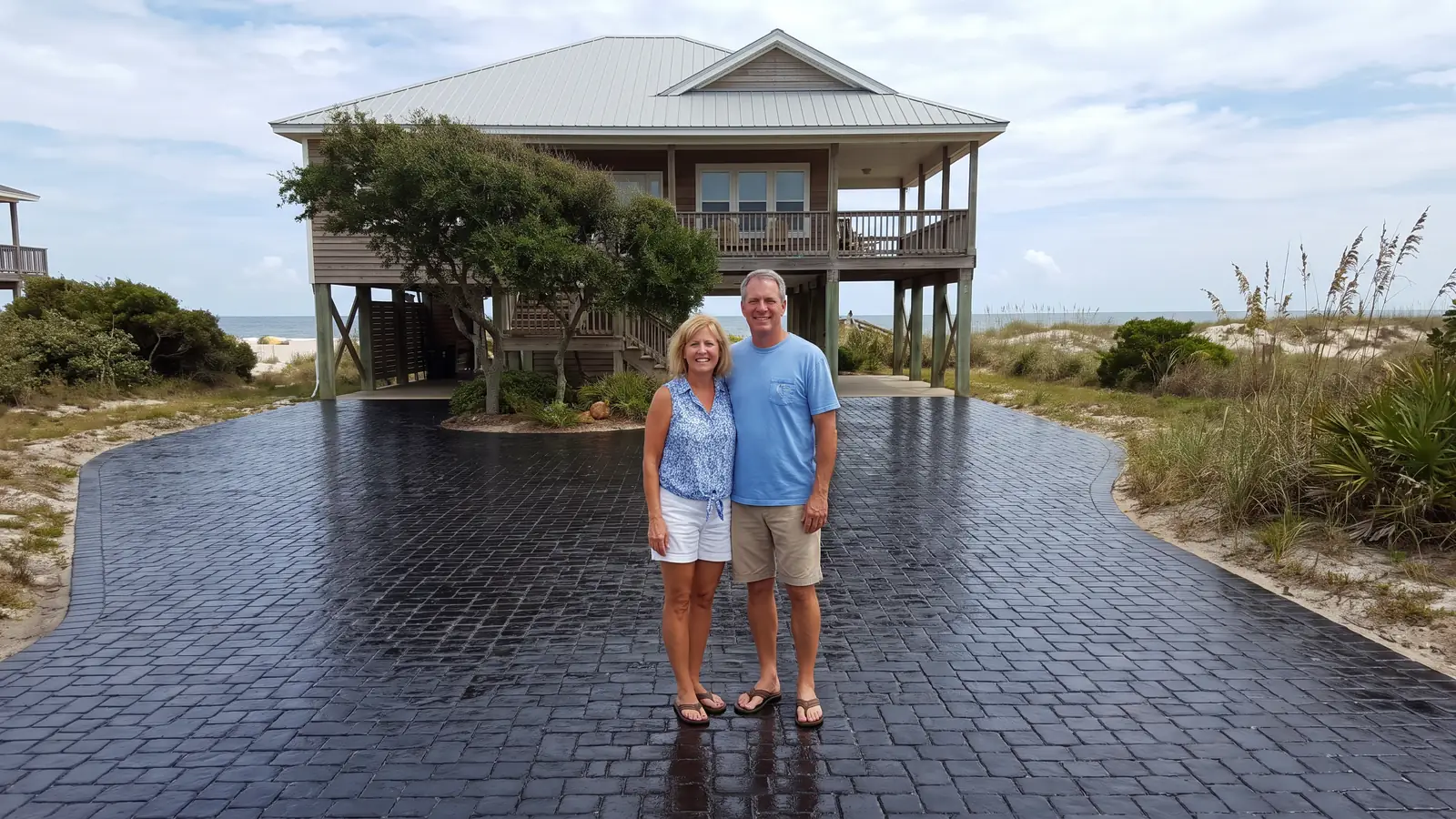
Paver sealing for Palm Valley homes
Paver Sealing in Palm Valley, FL
In Palm Valley, your pavers may be yours or your association's, so call (904) 468-6386 for a free sealing estimate.
- Brings out deeper paver color
- Fresh joint sand helps lock pavers in place
- Gives weeds less room to grow
- Makes the surface easier to keep clean
- Free estimate, no obligation
Request a Free Estimate
Free, no obligation.
Fast, careful paver sealing in Palm Valley
Paver sealing in Palm Valley comes with a free estimate for homeowners, townhome owners and condo boards alike, and the reply arrives within 1 business day, usually much sooner. A local contractor measures the pavers and prices the job before anything is agreed. For a first conversation, call (904) 468-6386.
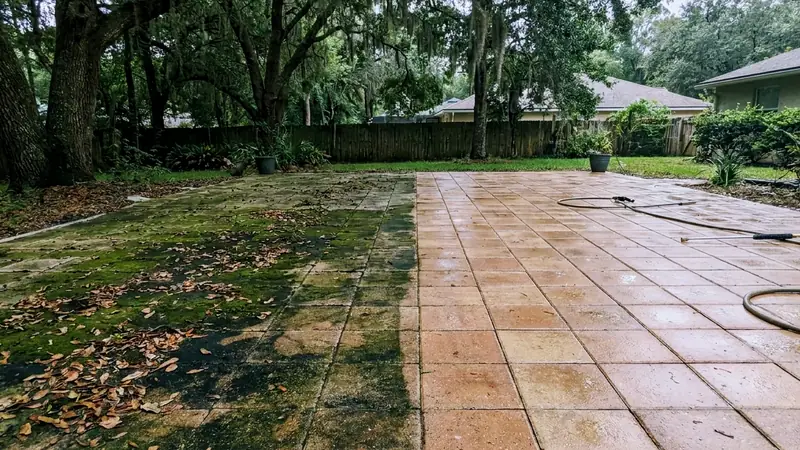
Say the walkway outside your door has gone green under the oaks and the joints have gone soft. After a wash, new sand and a fresh coat, it dries to one even tone that sweeps clean. To describe what you see, send in the short estimate form.
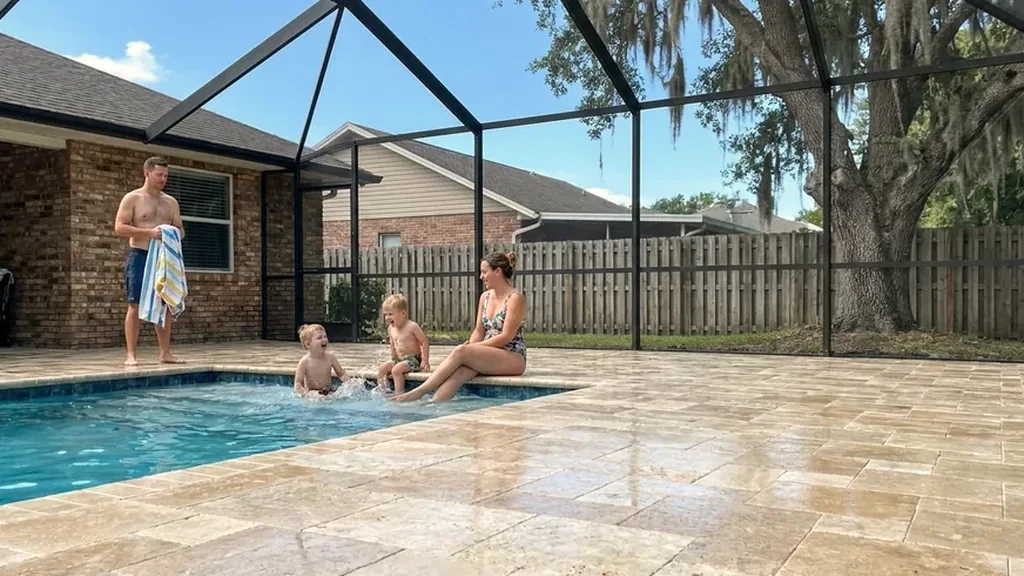
Why hire a local paver sealing contractor in Palm Valley?
Census estimates count 2,511 of Palm Valley's 9,803 homes in buildings of 3 to 19 units, so a paver job here is often a shared decision. A local contractor can write the quote for one owner or for a whole association, and you can send in the short estimate form to start either kind.
Quotes for owners and boards
A written estimate lists each walkway, drive and deck by square foot. That makes it easy to hand to a spouse or a board.
A range to hold quotes against
Companies here commonly publish $1.75 to $3.25 per square foot to clean, sand and seal. Compare any Palm Valley bid to that.
Care near shrubs and water
Wash water and sealer should stay off palms, flower beds and the Intracoastal side of your lot. Ask how the contractor protects them.
You or your board decides
The estimate is free and carries no obligation. You, or your association, set the date, the finish and whether to go ahead.
Get Your Free Estimate in Palm Valley
Tell us about your pavers in Palm Valley.
Free, no obligation
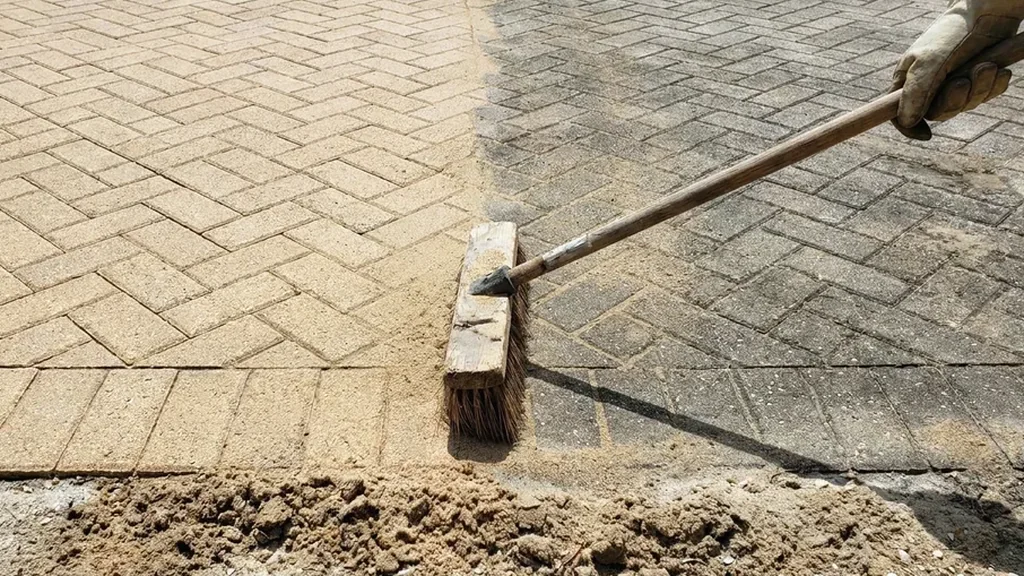
What paver problems show up most in Palm Valley?
Green film where oak shade lingers
A state marker at the Palm Valley Community Center says the hammock was once covered with oaks, magnolias and palms. Where shade like that remains, moss and algae can take hold, and the trade article is blunt that pavers should stay free of both unless the spot is heavily shaded. A wash clears the film, but the shade is what brings it back. Heavy shade is a reason to check the coat sooner, and a reason to ask what the contractor does about the film before sealing. Sealer over living algae locks the problem in.
Joint sand that thins on busy walks
Lost joint sand widens the joints, lets soil in and helps weeds root, the same trade article explains. Shared walks and entry paths take feet from several households all day, so sand can thin faster there. Jacksonville also gets most of its rain from May through September, in short, hard downpours that push sand around. Fresh sand goes in before any coat, so the pavers lock together again. A contractor who skips that step is sealing over gaps, and the gaps are where weeds return.
Salt spray near the water
Palm Valley homes overlook the Intracoastal Waterway, which puts many lots close to salt water. UF/IFAS says people living within a couple of miles of it have likely seen salt spray damage on plants. A paver maker adds that airborne salt can crystallize as moisture dries and that pale pavers show the marks first. A rinse before sealing keeps the salt from being sealed in. If your lot backs up to the waterway, mention that when you call. It also shows the contractor how dull the color has become, which helps in choosing a finish.
Condo walkways that nobody owns alone
Palm Valley has 2,511 housing units in buildings of 3 to 19 units, per Census estimates. In a condominium, Florida Statute 718.113 makes the association responsible for maintaining common elements, so a worn shared walkway may be a board matter, not one owner's. Ask your manager which pavers count as common property before you ask for a quote. A board also needs an itemized price to vote on. A quote that lists each walk by square foot makes that vote simple, and it lets neighbors compare one building with another.
Pavers older than the paperwork
Census estimates put the median Palm Valley home at a 1991 build year. Pavers added since then may have been sealed under one owner and not another, and nobody wrote the product down. Water-based sealer cannot go over solvent-based, so the contractor checks the old coat before choosing a new one. A failed coat may need stripping first, which changes the price. If you know who sealed it and when, mention that when you call, because it can shorten the first visit.
Does sealing work differently in Odom's Mill, Plantation Oaks and Palm Valley's condo buildings?
It can, because the person who decides is different. Wikipedia lists Palm Valley Landing, Plantation Oaks, Seaside, Odom's Mill and Dolphin's Cove among the neighborhoods. A local brokerage says Odom's Mill has more than 230 single-family homes of about 1,800 to 4,200 square feet and a community pool. If you own your pavers outright, call (904) 468-6386 and the contractor can price just your drive and walk.
Condo and townhome owners follow a different path. Census estimates count 2,511 Palm Valley homes in buildings of three to 19 units, and Florida Statute 718.113 makes the association responsible for common elements. A shared walkway may therefore go through a board. To get an itemized quote you can hand to your manager, send in the short estimate form.
The finish deserves a look at the rules too. One Jacksonville paver page says a natural-look sealer may be treated as maintenance, while a color-enhancing or high-gloss finish is likelier to need approval. Florida Statute 720.3035 lets a homeowners association review changes to the extent its own documents say so. A sample patch on one walk can settle a disagreement before the whole job is booked, so call (904) 468-6386 and ask for one.
What does paver sealing cost in Palm Valley?
Published rates in this area land between $1.75 and $3.25 per square foot to clean, sand and seal. For a Palm Valley single home, the job often combines a driveway, a front walk and sometimes a pool deck. Old sealer and thin joint sand push the cost toward the top of the range. To get your number for the driveway, the walk and any deck, send in the short estimate form, and the visit is free.
A board or management company has a different shopping list. Ask for each walkway priced by square foot, plus a line for stripping if an old coat has failed. Smaller projects cost more per square foot because prep time does not shrink, so grouping nearby walks into one visit can help. Call (904) 468-6386 to ask about grouping nearby walks.
Timing affects the plan more than the price. A shaded lanai may need a second dry day, and a stormy week can push a booking back. Ask what happens to the quote if the date slips, and get the answer in writing. To ask now, call (904) 468-6386.
| Paved area | Typical example | Clean, sand and seal |
|---|---|---|
| 300 sq ft | Small patio or walkway | $525 to $975 |
| 600 sq ft | Two car driveway | $1,050 to $1,950 |
| 1,000 sq ft | Large driveway or pool deck | $1,750 to $3,250 |
| 1,500 sq ft | Driveway plus pool deck | $2,625 to $4,875 |
Math based on the $1.75 to $3.25 per square foot that Northeast Florida paver companies publish. Your contractor sets the actual price after seeing the surface. Repairs, leveling and stripping failed sealer are usually extra.
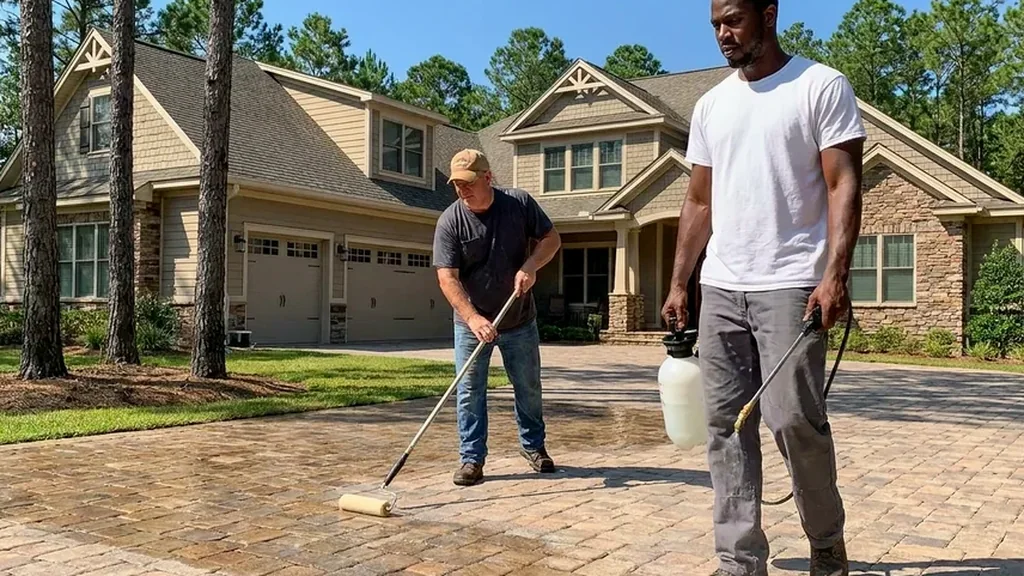
How does a paver sealing job work in Palm Valley?
Walk the pavers and ask who owns them
The contractor walks the surfaces and measures each one. For a shared walkway, the first question is who owns it and who signs off. Next comes the old coat, because a water-based product cannot go over a solvent-based one. The result is a written price by surface that you or a board can read. Photos of the area are fine if you cannot be home, and no one needs to be present for the measuring.
Wash away oak film and salt
Cleaning removes green film from shaded stretches, rust and oil spots, and any salt left by sea air. Pressure is matched to the stone so the joints are not blasted out. Rinse water is kept off palms and flower beds as much as possible. Stubborn stains may need a second treatment. Pale pavers show salt marks sooner, so the contractor reviews the wash in daylight before moving on.
Refill the joints
The wash pulls sand from the joints, so fresh sand goes in before any sealer. Full joints lock the pavers together and slow the weeds that root in empty ones. Sunken spots are reset first, because sealer over a dip only preserves it. The surface is swept clean when this step ends. If the joints were nearly empty, expect this stage to take a little longer than the washing did.
Let shade and water dry out
Sealer needs a dry surface. Shaded walks near the water can stay damp long after a sunny drive has dried, so the contractor waits and checks. Sealing damp pavers is a common reason a coat turns white. Rain in the forecast moves the day. Fall is the drier stretch in Jacksonville, which is why Safe Touch points to it for sealing pavers.
Seal, roll and rope off
A sprayer applies the sealer, then a roller pushes it into the joints and levels the finish. Feet are fine after a few hours, and cars wait about a day. On a shared walkway, the contractor marks it off so residents know when it is ready. You get the product name and the finish in writing. That record makes the next coat easier to match when the time comes.
Complete paver services in Palm Valley
Washing comes first, and it is gentler than most people expect. Pressure is matched to the stone because PaverGuard warns that harsh washing can loosen joints and dislodge sand. Algae, rust and oil are treated, and the joints are re-sanded before any coat goes on. For the order of work on your walkway, call (904) 468-6386.
Each surface wears in its own way. A condo entry walk sees many feet, a pool apron sees splash and bare feet, and a private driveway sees tires and oil. One Jacksonville company says matte or penetrating sealer is safest near pools. Tell the contractor which surfaces you have when you send in the short estimate form.
What is on the stone now narrows the choice of sealer. Water-based sealer cannot go over solvent-based, and a failed coat may have to be stripped first. After that comes the finish: a natural matte look, or a wet look that shows scuffs sooner. Call (904) 468-6386 to talk through the options.
Palm Valley sits low and close to the water, so drying time matters. Sealer needs a dry surface, and Jacksonville's rain comes mostly from May through September. Safe Touch points to fall for sealing because it is drier. To find a date that gives your pavers time to dry, send in the short estimate form.
Questions to ask before you hire
- Can I see a written estimate with the sealer product and the number of coats on it?
- Do you rinse the salt off before the sealer goes on, or only wash the surface?
- How do you protect my palms, shrubs and flower beds from the wash water and sealer?
- Can you remove the green algae and the rust spots that sprinklers leave behind?
- Do you give the pavers time to dry fully after the wash, or seal them the same morning?
- Will you tell me the square footage you measured and what each square foot costs?
- Has the sealer you plan to use been tested on pavers near salt water and sea spray?
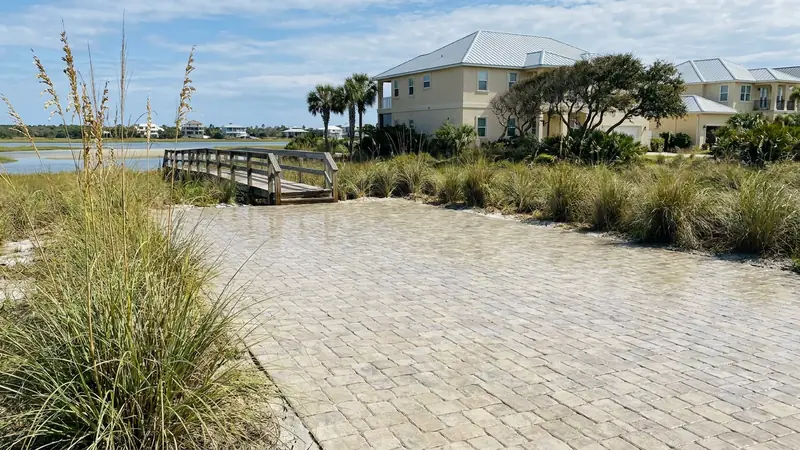
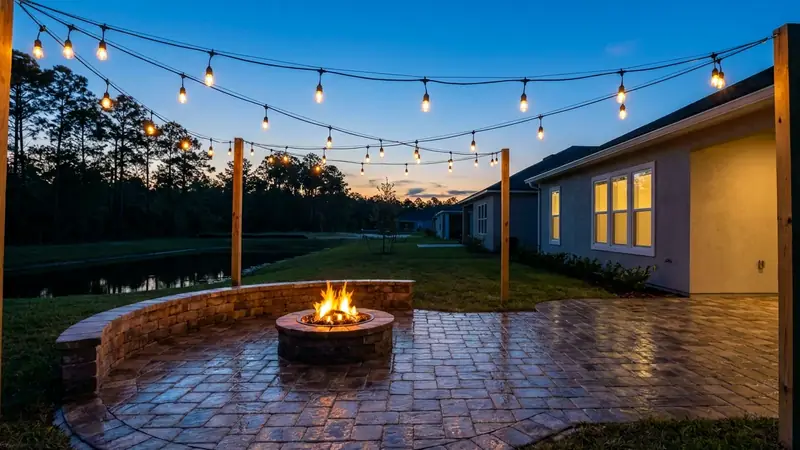
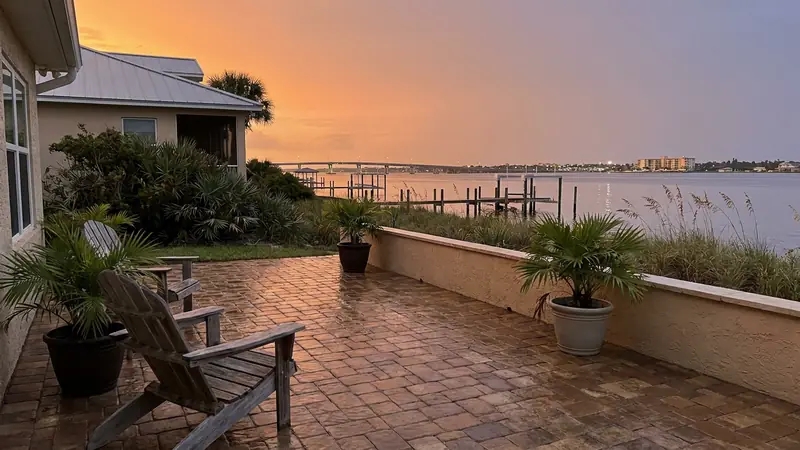
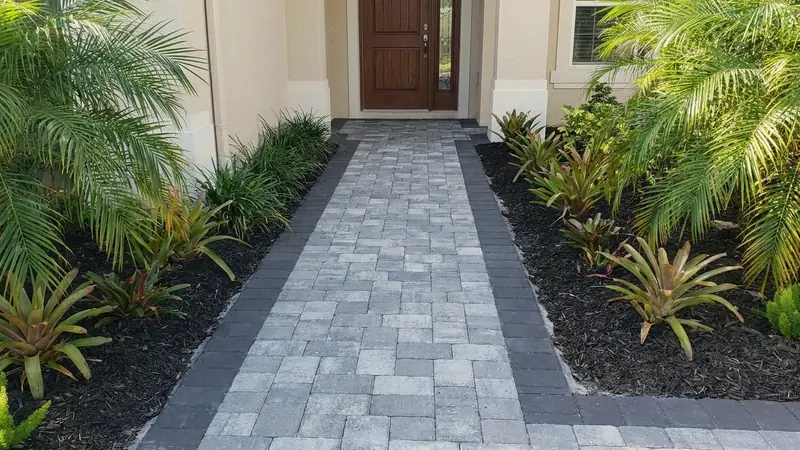
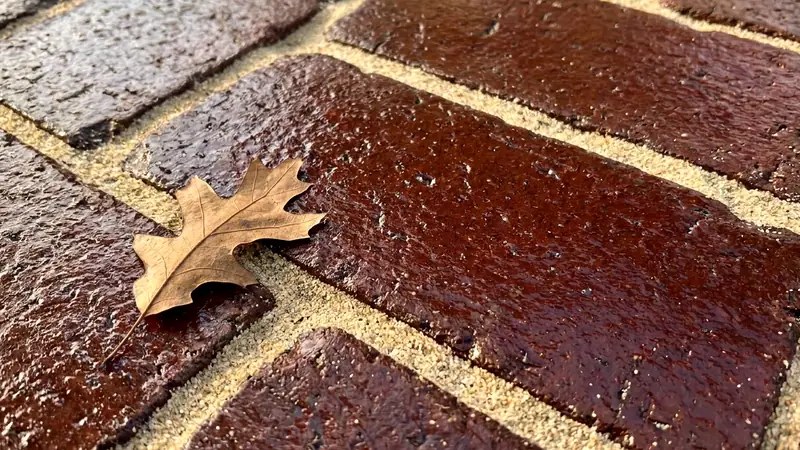
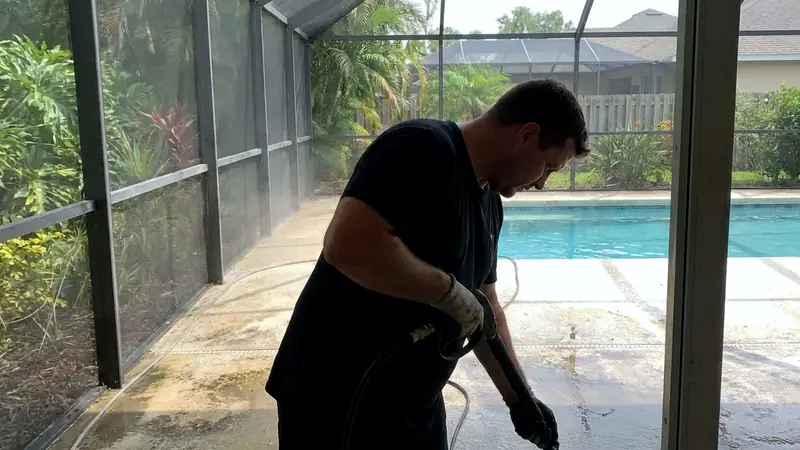
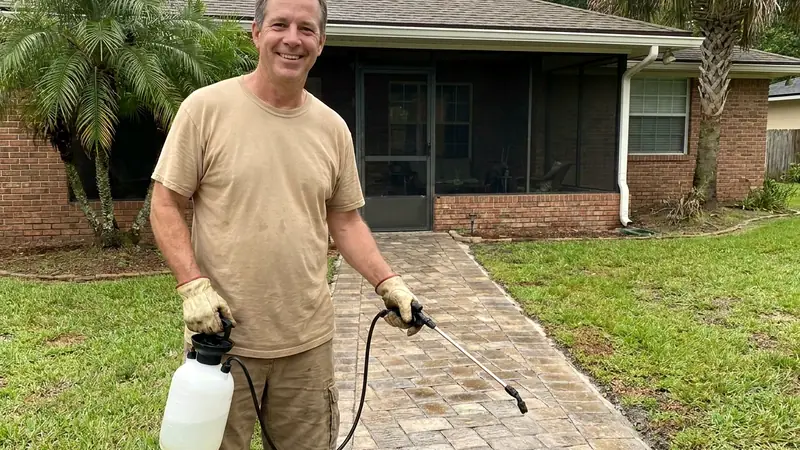
What do sealed pavers look like around Palm Valley?
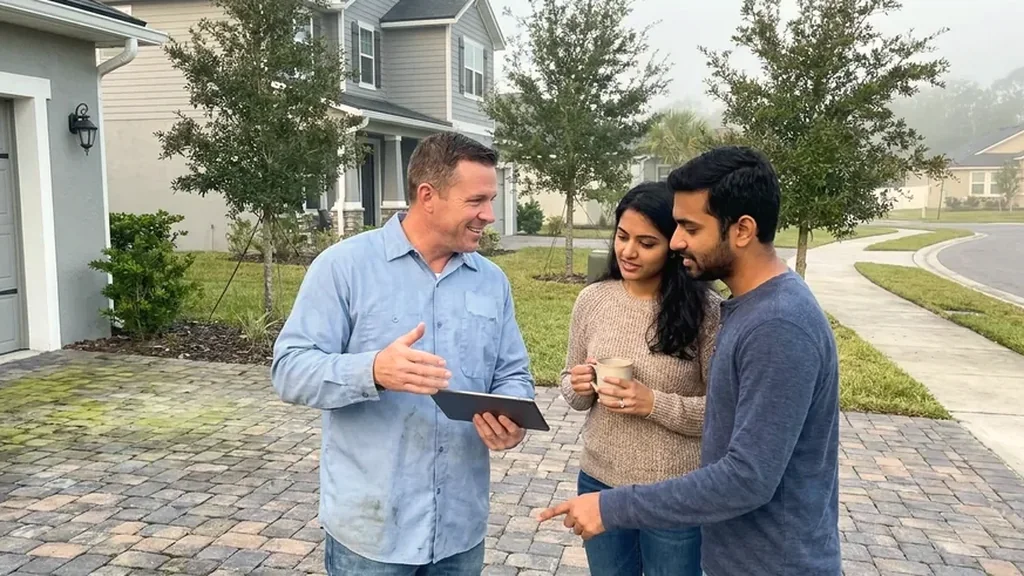
Why local matters in Palm Valley
A contractor who works Palm Valley knows the place mixes older single-home streets with newer shared buildings, and quotes each one differently. Somebody new to the area may not ask who owns the walkway. A short question at the start avoids a stalled job, so call (904) 468-6386 and start there.
Palm Valley's history gives clues about its ground. The Intracoastal opened in 1912, and a state marker says finishing it through Palm Valley drained much of the old marsh. Back in 1908 a canal had joined the San Pablo and Tolomato rivers here. A contractor who knows this low, wet setting watches drying time closely, so send in the short estimate form and ask how that plays out on your lot.
Hiring nearby also helps when an association is involved. A local contractor can meet the manager, walk the common areas and write one quote per building. That saves the board a second round of questions and keeps one set of dates for every owner. If you manage a property or sit on a board, call (904) 468-6386.
How did Palm Valley get its name and its canals?
Settlers chose the name Palm Valley for the many palm trees growing there, says the Beaches Museum. Don Diego Espinoza had settled by 1703 on land known as Diego Plains. A canal dug in 1908 joined the San Pablo and Tolomato rivers and made the valley easier to reach. Near the canal, call (904) 468-6386.
At 148 Canal Boulevard, the Palm Valley Community Center houses one of North Florida's oldest community associations. Families once cut and shipped about 400,000 palm fronds a year to churches up north, and Palm Valley Road was once a dirt road. A fixed four-lane bridge replaced the old drawbridge on County Road 210 in 2002. If your home is near any of these, send in the short estimate form.
Odom's Mill, Plantation Oaks and Dolphin's Cove each have their own entrances and rules, so a contractor learns them one gate at a time. Palm Valley is a small place on the map, at about 12 square miles of land, yet it holds a wide range of pavers. Older ones sit beside new ones, and some belong to a person while others belong to a building. Tell the contractor your neighborhood when you call (904) 468-6386.
Frequently Asked Questions
Is it good to seal pavers near the Intracoastal in Florida?
Yes for most surfaces that see sun, water and traffic. A coat helps against fading, stains and lost joint sand, though nothing requires it. Palm Valley's salt air and shade make a coat easier to justify. Ask the contractor to look at each surface separately.
Why is paver sealing so expensive in Palm Valley?
Most of the cost is prep. Prep runs two to three hours for every hour of sealing, one Jacksonville company reports. Failed old sealer must be stripped, and smaller jobs cost more per square foot because prep time does not shrink.
What does re-sanding and sealing cost on Palm Valley pavers?
The commonly published range is $1.75 to $3.25 per square foot, covering the wash, new sand and the coat. Your Palm Valley total depends on square footage, old sealer and repairs. A written quote should show each surface separately so you can check the math.
Is it better to spray or roll paver sealer in Palm Valley?
Professionals often do both. The sealer is sprayed for even coverage and then back-rolled so it works into the joints. That step also pulls up extra product that could dry cloudy.
Does a Palm Valley condo board pay for shared walkway sealing?
Under Florida Statute 718.113, maintaining common elements falls to the association, so a board usually handles shared walks. Whether a particular walkway counts as a common element comes down to your declaration. Your manager can confirm before you ask for a quote.
When do Palm Valley pavers need sealing again?
Quoted lifespans run two to five years per coat in this area. Sunny drives and busy pool aprons sit toward the short end. Try a sprinkle test: water that beads shows a working coat, and water that darkens the stone shows a spent one.
Does an HOA have to approve a paver sealer in Palm Valley?
Only if its own rules say so. Florida Statute 720.3035 lets an association review changes to the extent its documents allow. A natural-look finish is likelier to count as maintenance than a glossy one, according to one Jacksonville page.
What does a Palm Valley board need in a paver sealing bid?
A board packet works best with one line per walkway, each showing its square footage and price. Add the sealer product, the finish and the stripping and sand lines, and note when residents may walk on the surface again. Lines like these let the board compare bids side by side and file the details for the next coat.
Ready for a Free Estimate in Palm Valley?
Call (904) 468-6386 and tell us about your pavers.
Free, no obligation